🔈Design bunker edges, without limits. Check out the new Edgevantage now.


🔈Design bunker edges, without limits. Check out the new Edgevantage now.
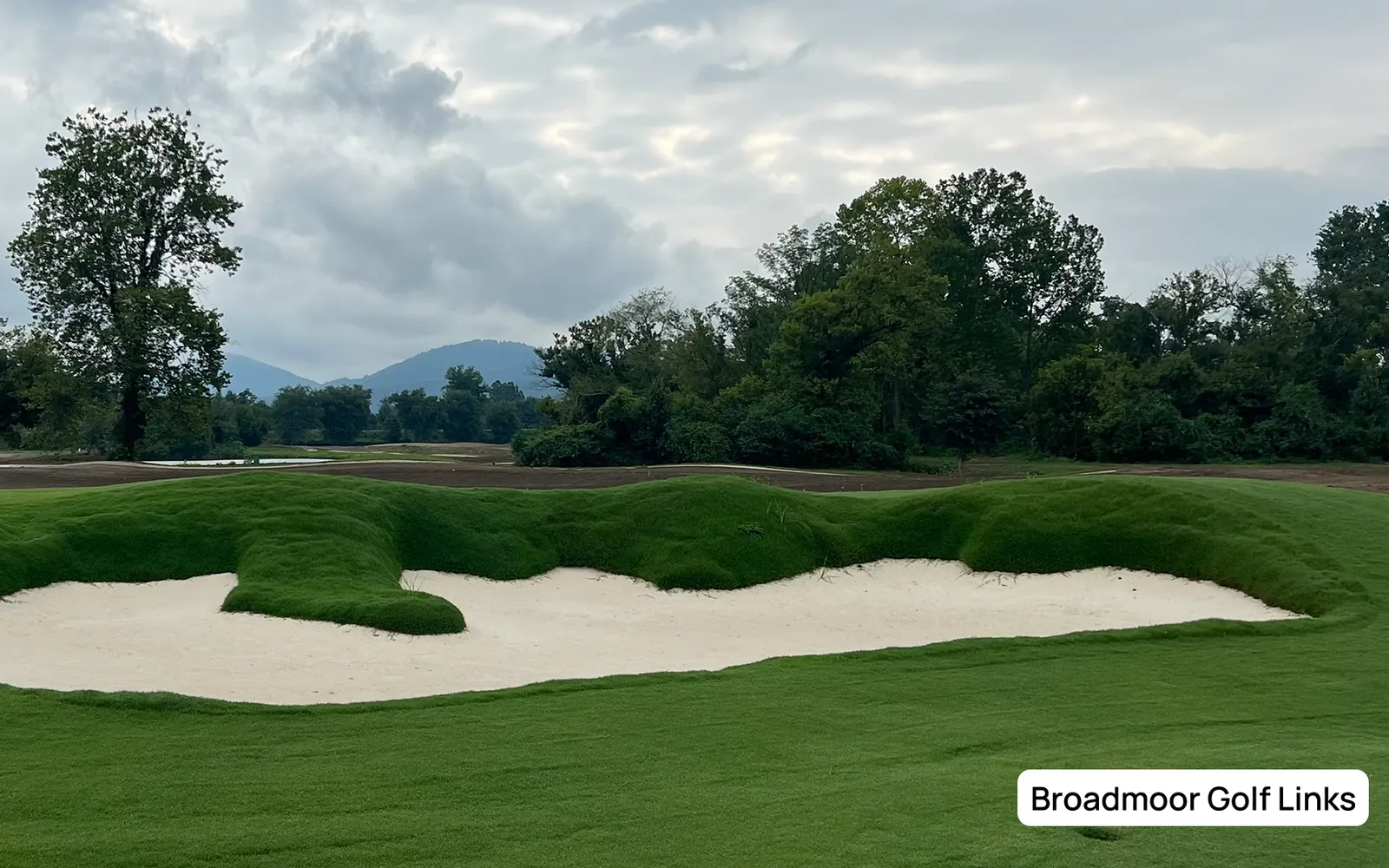

Broadmoor Golf Links

Hurricane Helene left Broadmoor Golf Links in Fletcher, North Carolina, under ten to twelve feet of water. Owner Zeke Cooper used the blank canvas to build the links course the property had always claimed to be, and to make sure water could never shut it down for long again.
Asked whether there was a moment he thought Broadmoor might never reopen, Cooper laughs. “Every single day for months!”
Helene tore through western North Carolina in September 2024. Broadmoor sits in the French Broad River valley, about 15 miles south of Asheville, with the river on one side and Cane Creek feeding onto the property from the other. Both came over the course. “When you first see a golf course under 10 to 12 feet of water, your first thought isn’t ‘how do we rebuild it?’ It’s ‘this is over.’”
When the water receded a week later, the full damage showed. “There was six to eighteen inches of mud covering 60 to 70 percent of the property. Thousands of trees were down. Every building had flooded. We lost our golf carts, maintenance equipment, food and beverage equipment, essentially everything that made the operation function.”
“There were plenty of mornings I drove in wondering if this place would ever see another round of golf,” he says. “Looking back now, it’s easy to talk about the comeback, but there were months where it felt impossible.”
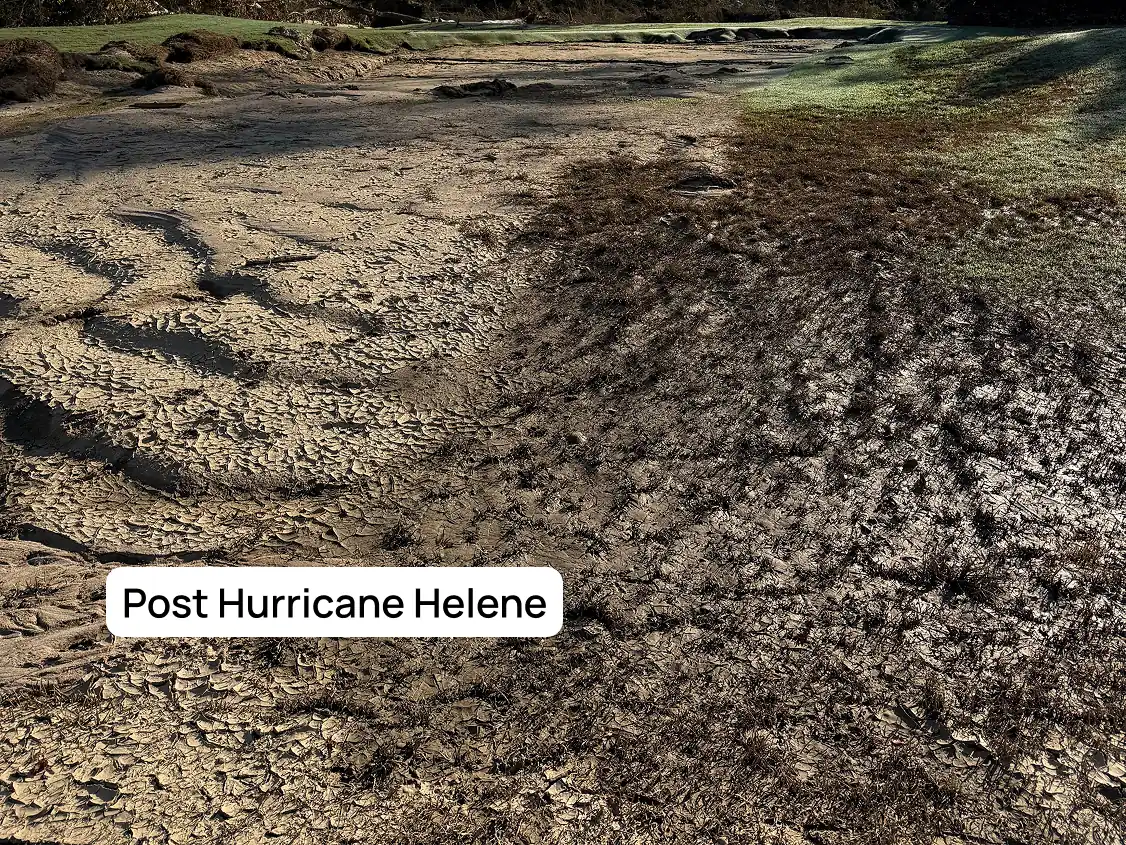
For the first four or five months, the work had nothing to do with golf. “They were about survival. We were gutting buildings, hauling mud, removing debris and trying to make the property safe again. Every day felt like we were taking one step forward and two steps back.”
Once the debris was mostly gone and the land reappeared, the question changed. “Instead of asking, ‘Can we rebuild?’ we started asking, ‘If we’re rebuilding anyway, how do we make this course better than it has ever been? How do we create a property where people want to come, even when they don’t have a tee time?’”
“That mindset changed everything,” Cooper says. “We stopped looking at the flood as simply a tragedy and started seeing an opportunity that very few golf courses ever get.”
Cooper’s company, DreamCatcher Hotels, leases Broadmoor from the Asheville Airport Authority on a 50-year term. He was three years in when Helene hit, with a $70 million hotel planned next to the course. “It reinforced that we couldn’t just rebuild what we lost. We had to build it for the next fifty years.”
He sees Broadmoor as the front porch of the area: a course locals play every week and visitors remember long after they leave Asheville, and a place that becomes the local hangout, not just another golf course. With the infrastructure to replace anyway, the team chose to invest in golf that would be unique for the region. “If we were going to start over, we wanted to do it right.”
The rebuild took Cooper back to where he started. As a high school student he interned at Tom Fazio’s office in Hendersonville, and he studied landscape architecture hoping to design golf courses one day. Instead he spent a decade running a landscape architecture firm, moved into construction management, and later managed the $360 million Harrah’s Cherokee hotel and conference center expansion before taking over DreamCatcher Hotels. Broadmoor was meant to be a good public course next to a new hotel. “We had no idea we’d be rebuilding Broadmoor a few years later.”
He worked the redesign alongside golf course architects Lee Marshall and Justin Carlton, with TreeWorks and Todd Godwin Construction as contractors. “It was as if my entire life was coming full circle, and I had enough knowledge to understand all aspects of the rebuild. I learned more during those months than I probably had in years.”
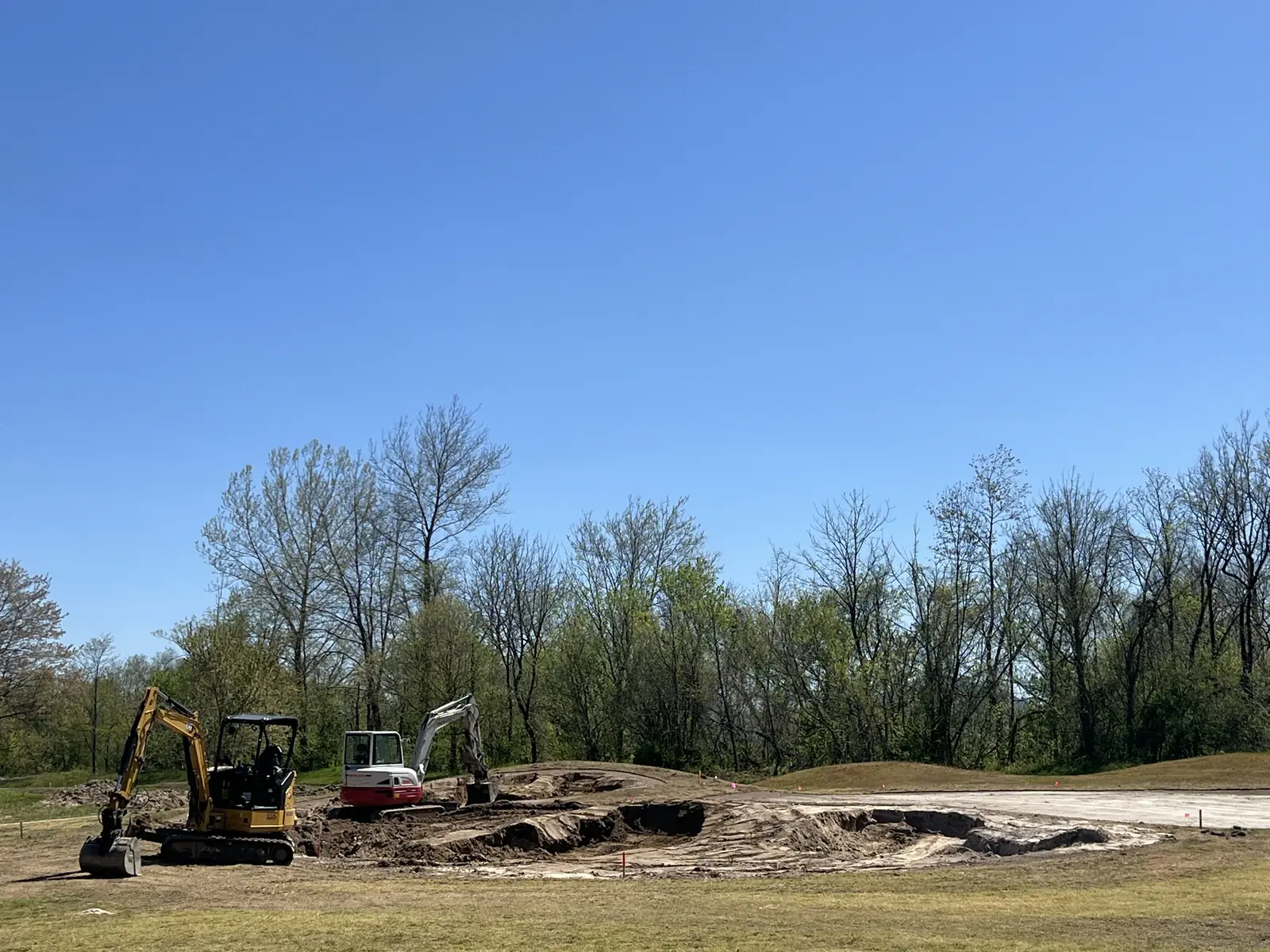
Holes 10, 11 and 12 had to be relocated, and few regulars were sorry to see them go. “From the time I first played Broadmoor as a teenager, #12 was by far the worst hole on the golf course. A goofy double dogleg par 5. Holes 10 and 11 were just boring short par 4s.”
The fix came from an unlikely source. Before the architects arrived, Cooper walked those holes with a prospective irrigation contractor. “He flippantly said, ‘It’d be cool if you could reverse them.’ I had never thought of that before. I went to my office and started sketching it out.” The plan reused two existing greens and needed only one new one. Marshall and Carlton took some convincing. “A few days later Lee called excited and said, ‘This can work!’ It was off to the races after that.”
“Rerouting those holes produced the biggest improvements on the golf course,” Cooper says. “The holes fit the land more naturally, and we were able to introduce options and angles that simply didn’t exist before. Sometimes the best architecture comes from being forced to solve problems.”
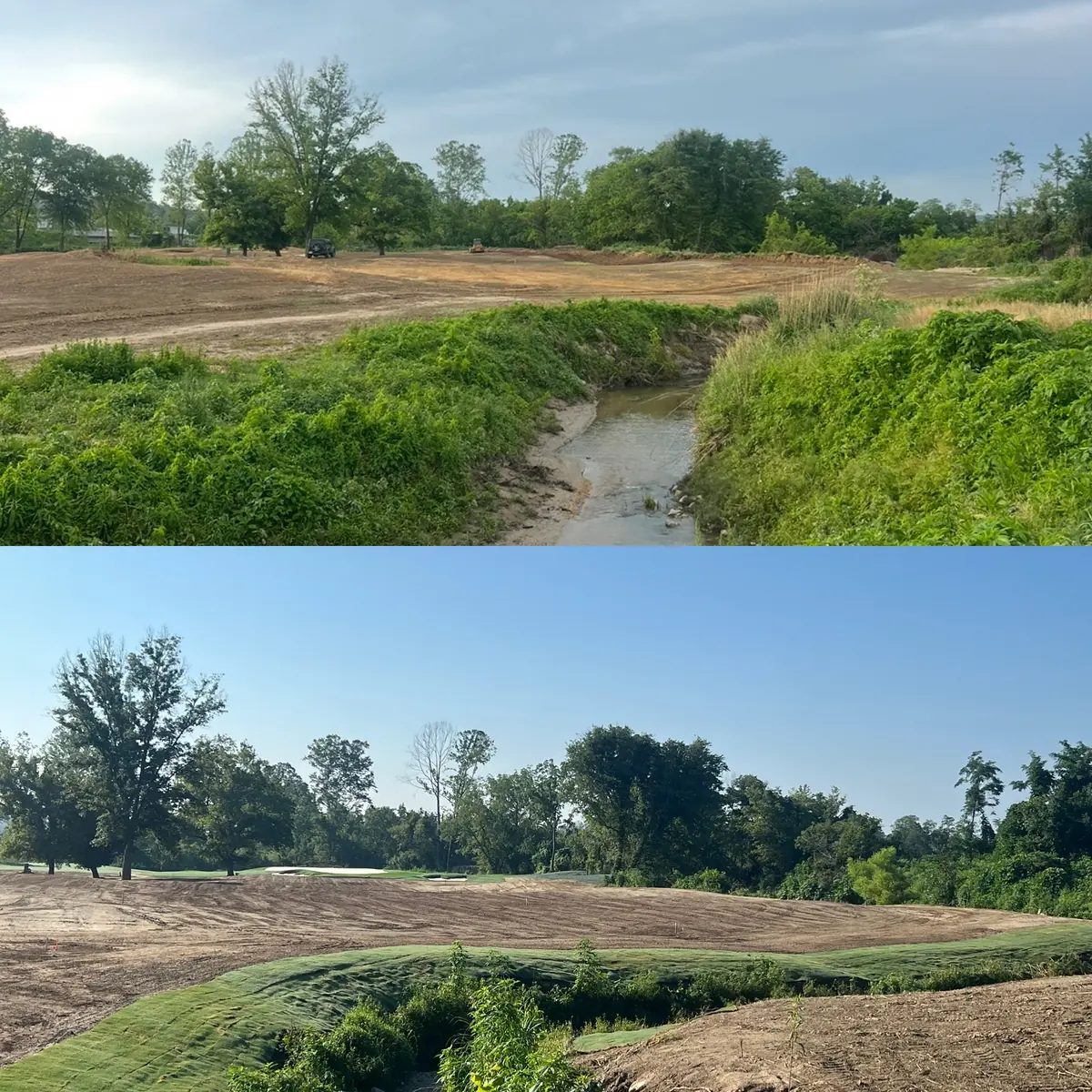
Broadmoor always called itself a links course. Before Helene, with water in play on 12 of 18 holes, it played soft and lush, closer to Florida than to anything firm and fast. “The flood gave us permission to finally become what Broadmoor had always aspired to be.”
With the trees gone, the course opened up. The rebuild brought wider corridors, tightly mown surrounds and bunkering placed for strategy rather than punishment. “You’re encouraged to use the ground now. Balls bounce and release. Recovery shots are creative. Players have options. That type of golf doesn’t exist in the mountains of western North Carolina.”
The new course has 42 bunkers, positioned to shape angles of play and decision-making rather than to penalize a miss, with natural edges and low faces. “They’re awesome!”
On a property beside the French Broad River and Cane Creek, drainage became one of the defining parts of the project, alongside pond-bank restoration and future flood prevention. Cooper chooses his words carefully. “We know we’ll see water events again someday. I won’t call them floods. Helene was a flood. Our responsibility was to make the golf course as resilient as possible and get it back into playable condition as quickly as possible after heavy rain.”
Bunkers are usually the first features to suffer in heavy rain: faces wash out and surrounding soil is carried into the sand. Broadmoor’s bunkers were lined with the Capillary Bunker liner, a porous layer that drains more than 100 inches of water an hour while drawing moisture back up into the sand during dry spells. “It gave us a bunker system that drains exceptionally well, stays consistent after storms and dramatically reduces washouts and contamination from surrounding soils,” Cooper says. “We wanted infrastructure that players would never notice, but that would make an enormous difference over the next several decades, with bunkers that are playable for all skill sets and easy for our staff to manage long-term.”
It came sooner than planned. In late May 2026, days before the reopening, western North Carolina took 8.5 to 10 inches of rain in three days, and Cane Creek breached its banks in places. “In the past when this would happen, our bunkers would wash out and stay wet for days. Now, the biggest wash, in 42 bunkers, was about the size of my index finger. The bunkers were immediately playable. It was amazing.”
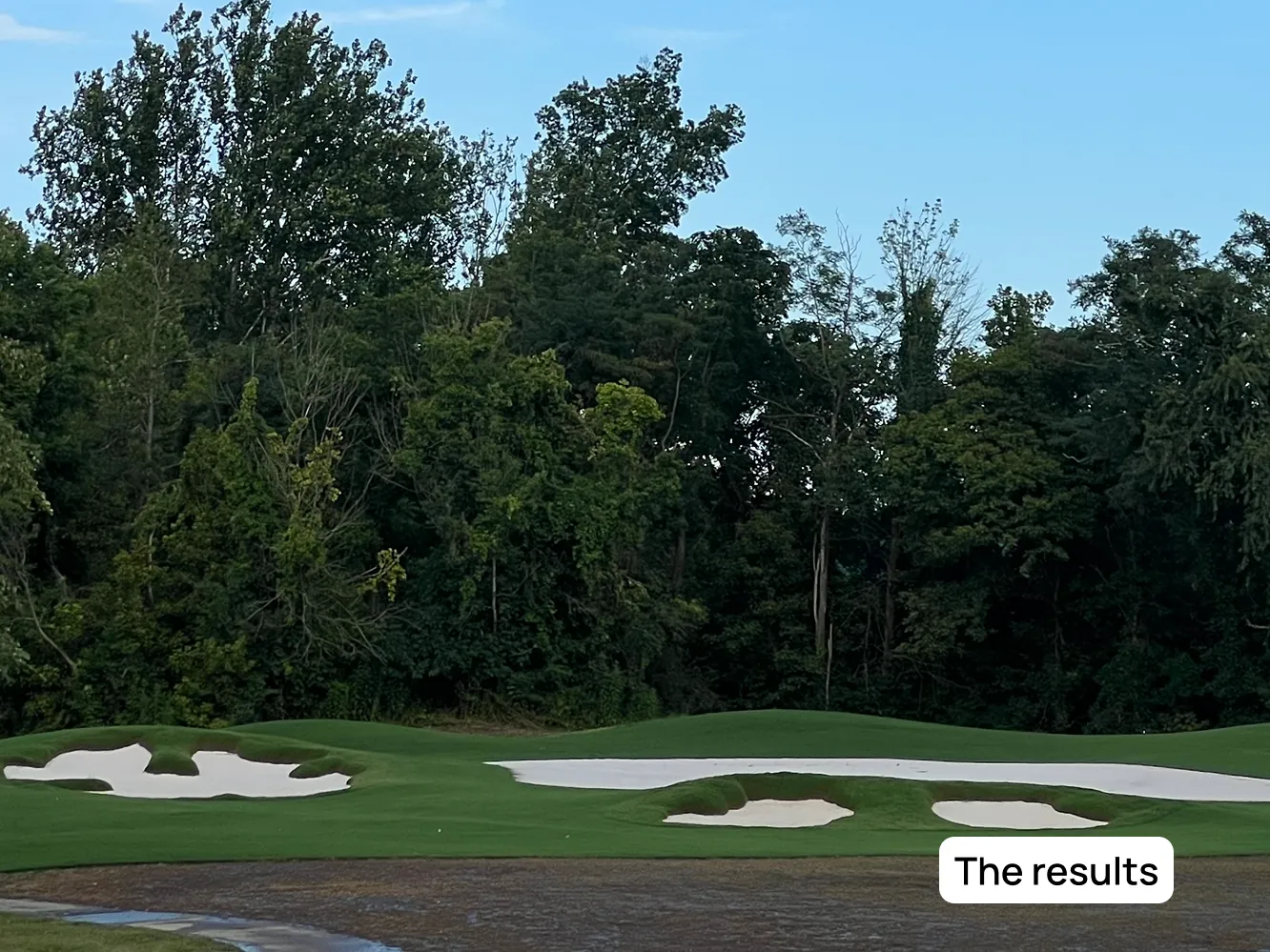
Preview play opened in June 2026, with KemperSports managing the course. Two years after the hurricane, Broadmoor finally plays like the links course it always said it was, and it is built to recover quickly from whatever the river and the creek send next. For Cooper, it is also the course-design career he set out for as a teenager. “To have a hand in shaping a course that means so much to our community is something I’ll always be grateful for.”
Want to know more about the Capillary Bunker liner? See how it works on our bunker liners page, or get in touch.

“In the past when this would happen, our bunkers would wash out and stay wet for days. Now, the biggest wash, in 42 bunkers, was about the size of my index finger. The bunkers were immediately playable. It was amazing.”