🔈Design bunker edges, without limits. Check out the new Edgevantage now.


🔈Design bunker edges, without limits. Check out the new Edgevantage now.
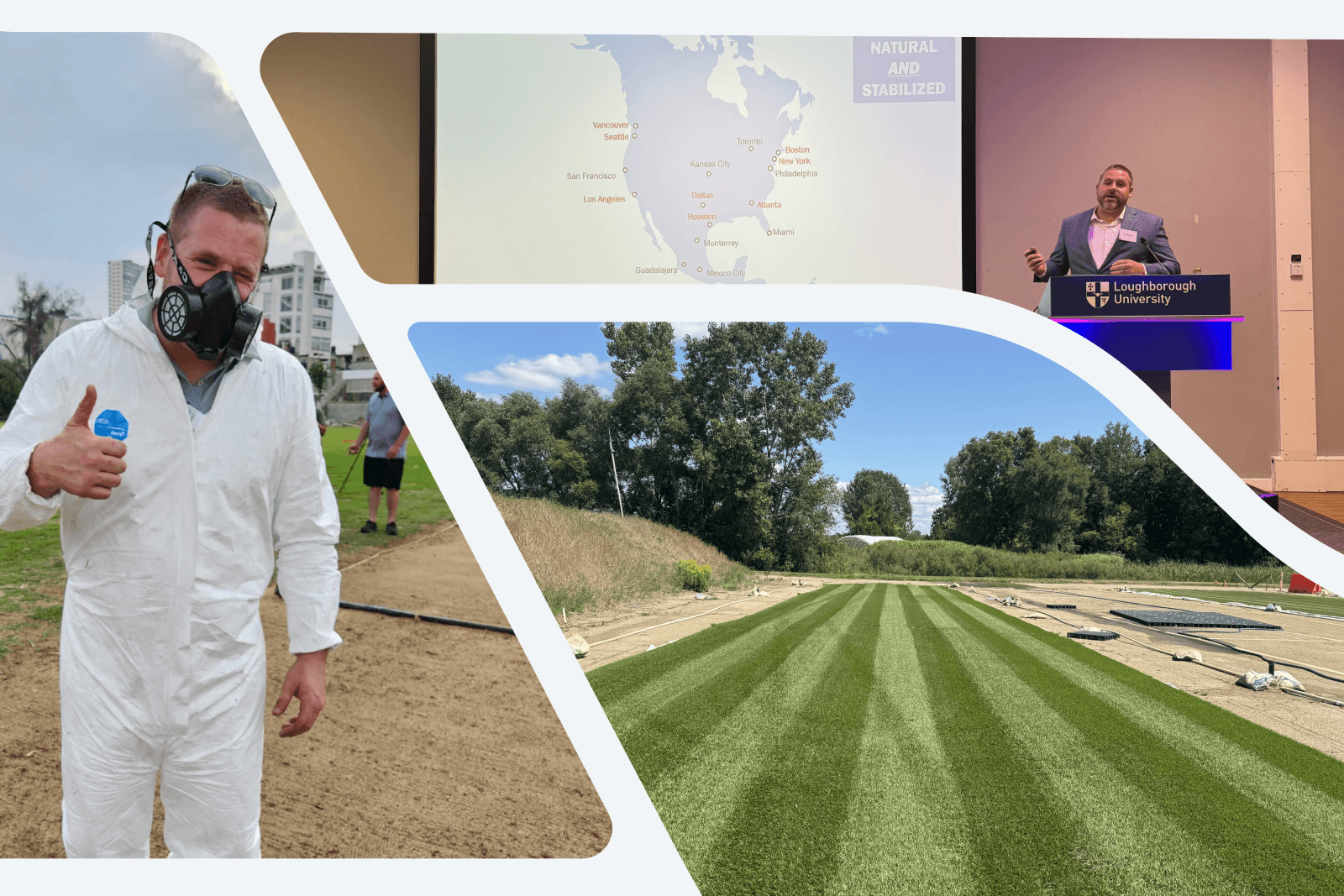


Haslett, MI, USA
A typical month meant building new experimental turf plots from scratch, testing them under various conditions built to emulate real match wear, then tearing the results apart to see what had actually happened underneath. That was Dr. Ryan Bearss's research routine for the better part of two years, working toward a tournament most of the world would only ever see on television: FIFA World Cup 2026. As of September 1, he's CapillaryFlow's Director of Research & Development.
The long way in
Bearss came to turf science by a longer road than most. He started in turf management in 2010, stepped away, then came back to the industry in 2013 at English Gardens, Metro Detroit's largest independent nursery, working as a plant diagnostician under George Dawes, a retired Purdue University agronomist. "Customers frequently told me I did not know what I was talking about," he says, "and at first, they were right. But I have always been motivated by being told I cannot do something." He became a lead mentor in his department within a year, and it was Dawes who, in 2014, introduced him to Michigan State University's turfgrass program.
Getting there took another detour. Bearss picked up a season on a golf course, a prerequisite for applying, while still working full-time at the nursery, then enrolled under Dr. Trey Rogers that fall. He earned his two- and four-year degrees, his M.S. in 2020, and his Ph.D. in 2026, all under Rogers. That decade of study on sand-based rootzone performance and hybrid turf stabilization is what eventually put him on a plane to some of the World Cup's biggest venues.
Four years for one tournament
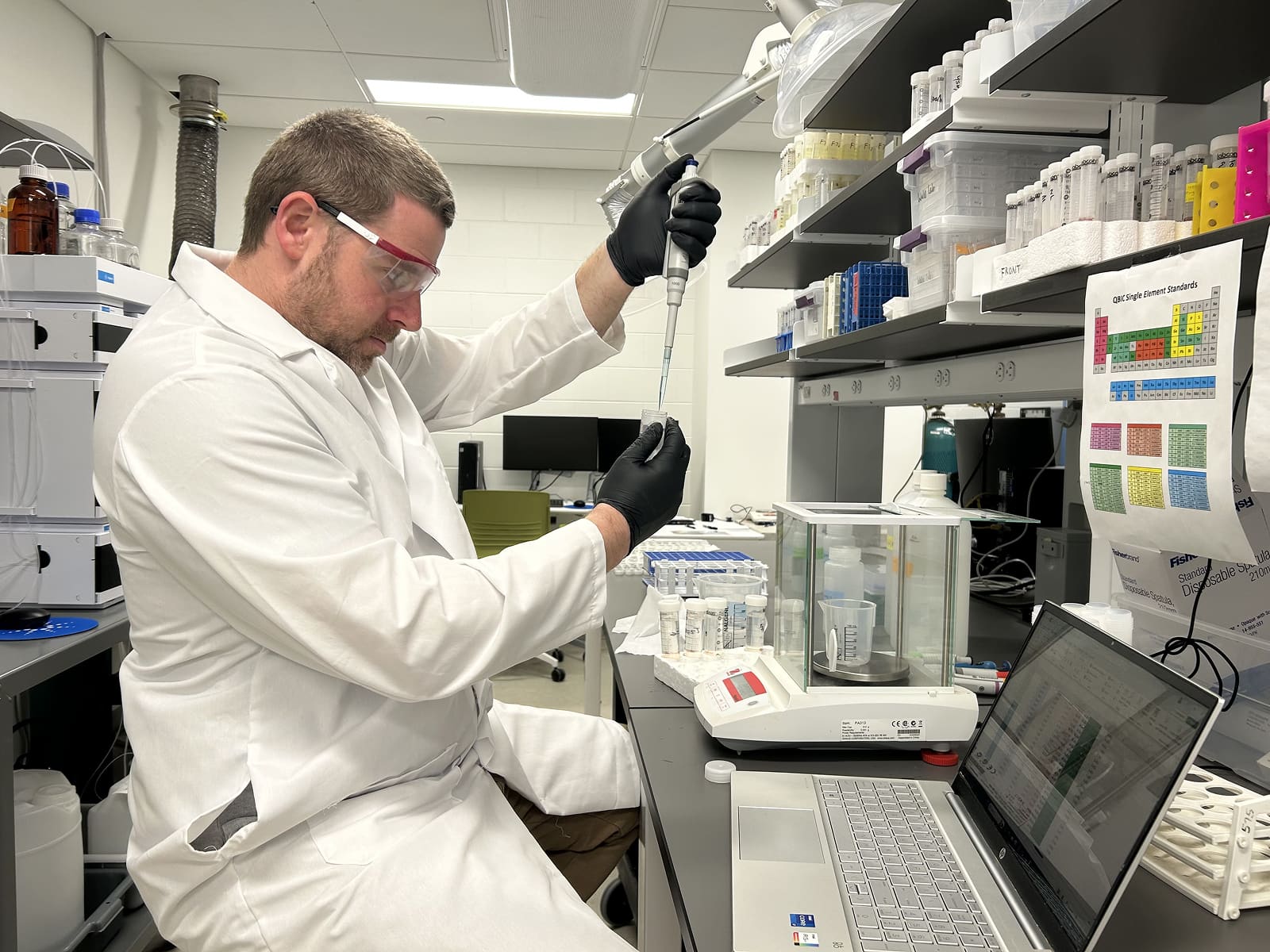
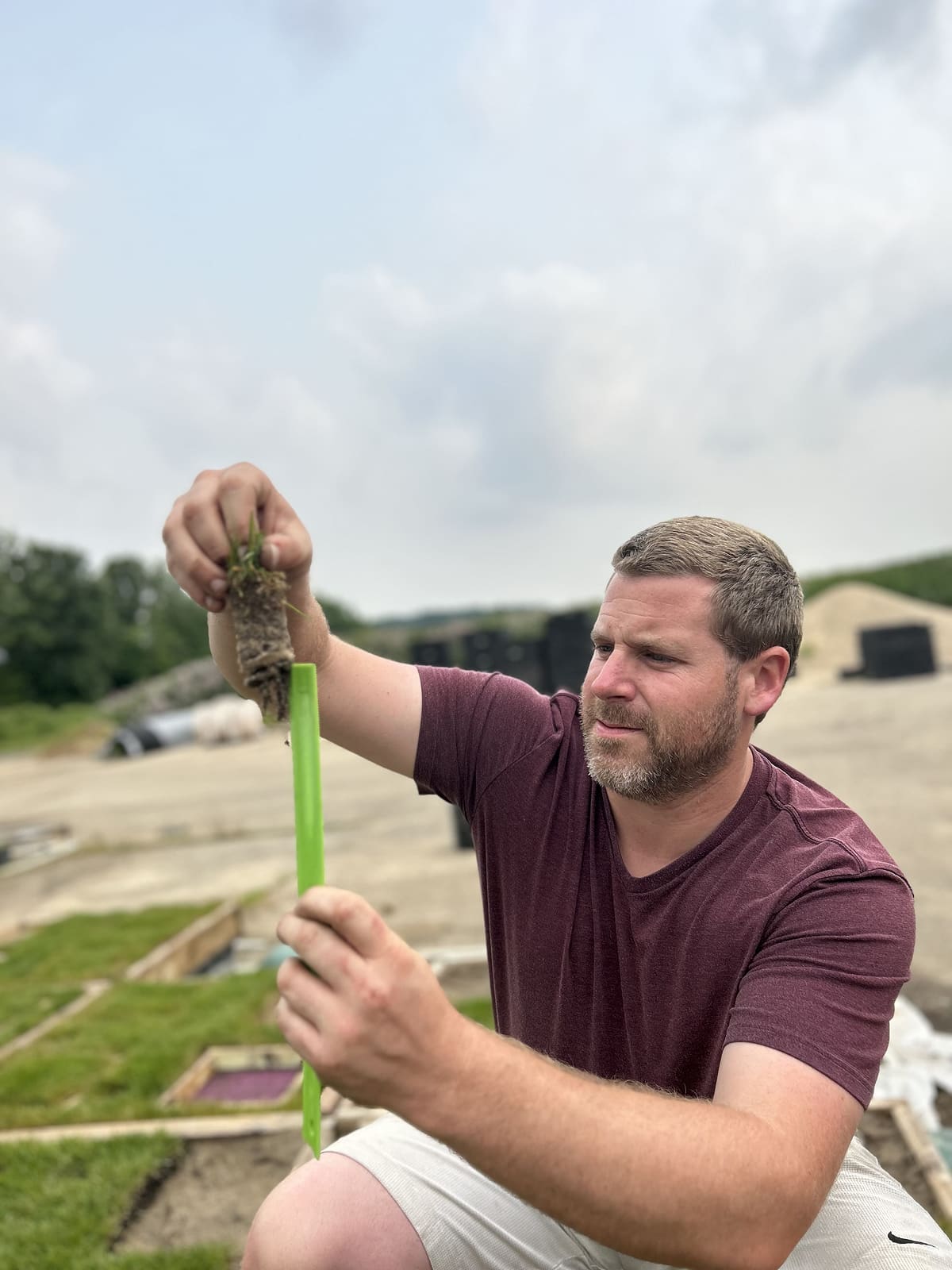
His graduate research put him on a team evaluating temporary playing surfaces for the World Cup's North American host venues, working alongside a parallel team at the University of Tennessee. "Day-to-day activities were quite variable, and that's what made the work so exciting," he says. "A typical month consisted of the constant construction of new experimental sites, the development of new concepts, and vigorous testing of the resulting surfaces." Some trials tracked organic matter and traction in hybrid turf. Others measured physiological effects of management programs, or the effects of microbial biostimulants on turf health and nutrition. "Every project came with different needs," he says. "To me, that's what makes research so much fun. I'm constantly learning."
For all that variety, ask him which single result he's proudest of and he redirects the question entirely. "I'm not proud, but I'm incredibly grateful to have been part of this project," he says. "The FIFA team, every single stadium, and sod grower went above and beyond to deliver the perfect pitch. The success of this tournament truly began at the sod farm and continued until the final whistle blew at each venue." He's quick to spread the credit further still: "It was entirely a team initiative. There was no 'I' about it. FIFA provided the funding and opportunity for us to test and evaluate nearly every concept we could think of."
%201.jpg)
Why CapillaryFlow
That instinct to credit the system over himself is part of why, when the World Cup work wound down, Bearss chose the CapillyFlow route. "I took this leap of faith and left academia because I truly believe that this system is unique and supported by an excellent technical team. Subsurface irrigation simply makes sense as the next BIG THING for our industry," he says. "Turfgrass already faces an uphill battle, and the most sustainable, and logically necessary, path forward must rely on more efficient approaches to water management. This system will change sport!"
The line between his research and CapillaryFlow's technology, in his telling, isn't a stretch so much as the same question asked twice. "Surface stability, longevity, uniformity, and consistency are all governed, to some extent, by rootzone moisture, which ultimately dictates the playability of a sports surface," he says. "Rootzone performance and hybrid stabilization fell into my lap somewhat by happenstance, when I had the opportunity to lead and support research for the FIFA World Cup 2026 initiative." It's also shaped how he thinks about the distance between a research plot and a real installation: "We, the researchers, identify the ingredients, while industry practitioners create the recipe. Scientific findings aren't meant to provide one universal prescription. They provide the evidence-based ingredients that practitioners adapt to produce the best recipe for their own conditions."
What's next
That distinction is on his mind as he settles into the new role. CapillaryFlow's push toward AI-driven surface evaluation is only as sound as the data underneath it, he says, and getting that foundation right is his first priority. "A good AI is only as good as the data it can access," he says. "My role from day one is to make sure the data and the routes for AI control of our system are practical and feasible from an agronomic and scientific standpoint," before more automation gets built on top of it. Beyond that, he describes the job in simpler terms: leaving no stone unturned to make sure every aspect of the system makes agronomic sense, leaning on his academic relationships to get there. "Collaboration, cooperation, and a think-tank mentality are key."
What's he looking forward to most? "Getting our first research project in the ground," he says, "and subsequently, our first stadium installation."

CapillaryFlow makes it possible to design baseball fields that are able to withstand tough playing conditions as well as ensure a healthy game experience for players.

Our proprietary Capillary Material makes it possible to have a bunker liner that rapidly drain while also retaining adequate sand moisture, creating the perfect playing conditions in golf course bunkers.

The Capillary Hydroponics system enables us to grow strong and durable grass with significantly less maintenance and environmental impact

Optimal riding conditions in any weather by providing a ground material technology offering superior drainage capacity and enabling use of subsurface moisture control - for the optimal footing

Capillary Hydroponic turf lengthens the season with natural strong grass that stays healthier even with a busy schedule

Our Capillary Hydroponics solution turns hardscaped surfaces into breathable, living spaces that augment the positive effects of greenery in urban environments.


